Who Was Anubis?
Anubis is one of the most recognizable figures from ancient Egypt, often identified by his jackal-like head and his connection to death. But describing him simply as “the god of the dead” leaves out much of what he represented. His role was closely tied to protection, preparation, and the care of the deceased as they moved from one stage of existence to another.

A Guardian at the Boundary
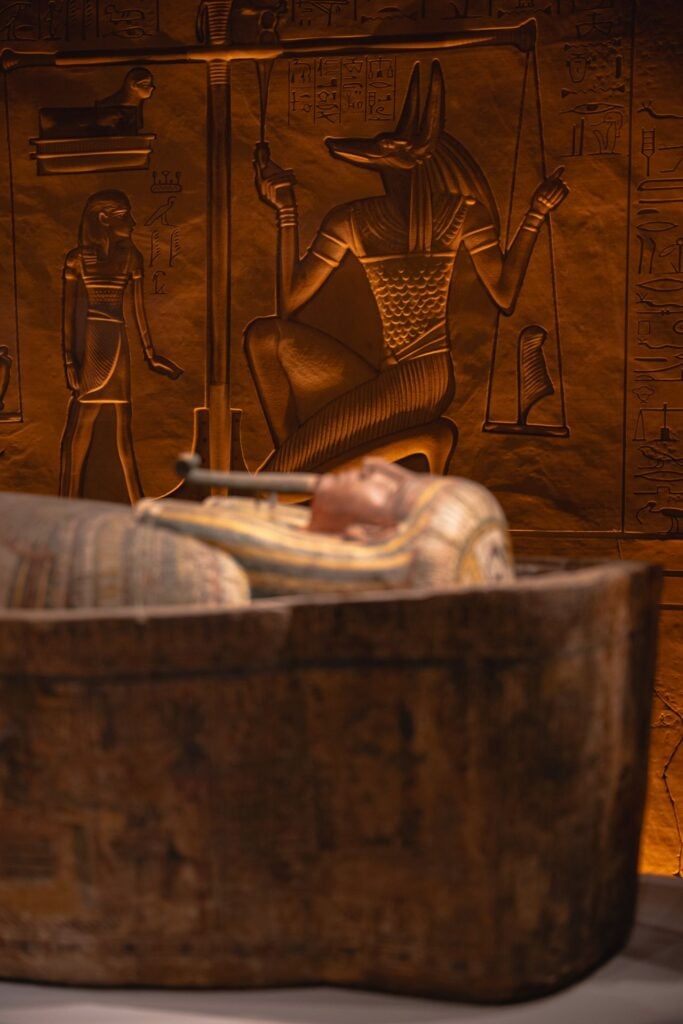
In ancient Egyptian religious tradition, Anubis was closely connected with mummification, burial, and the protection of the deceased. He was associated with the careful preparation of the body and with the spaces where the dead were laid to rest. Ancient Egyptian images also show him present during the weighing of the heart, an important part of the imagined journey into the afterlife.
His role was not simply about death itself. It was about what happened at a threshold. The deceased had left one part of existence and was entering another, and Anubis was represented as a figure who remained close during that passage. Protection, preparation, and accompaniment were all part of the way he appeared in funerary traditions.
That distinction matters. Across cultures, death has rarely been treated as a single moment. It is surrounded by practices involving the body, family, memory, objects, places, and rituals. The details differ widely, but people have long created ways to mark the space between a life that has ended and what follows for those who remain.
The Meaning of the Jackal
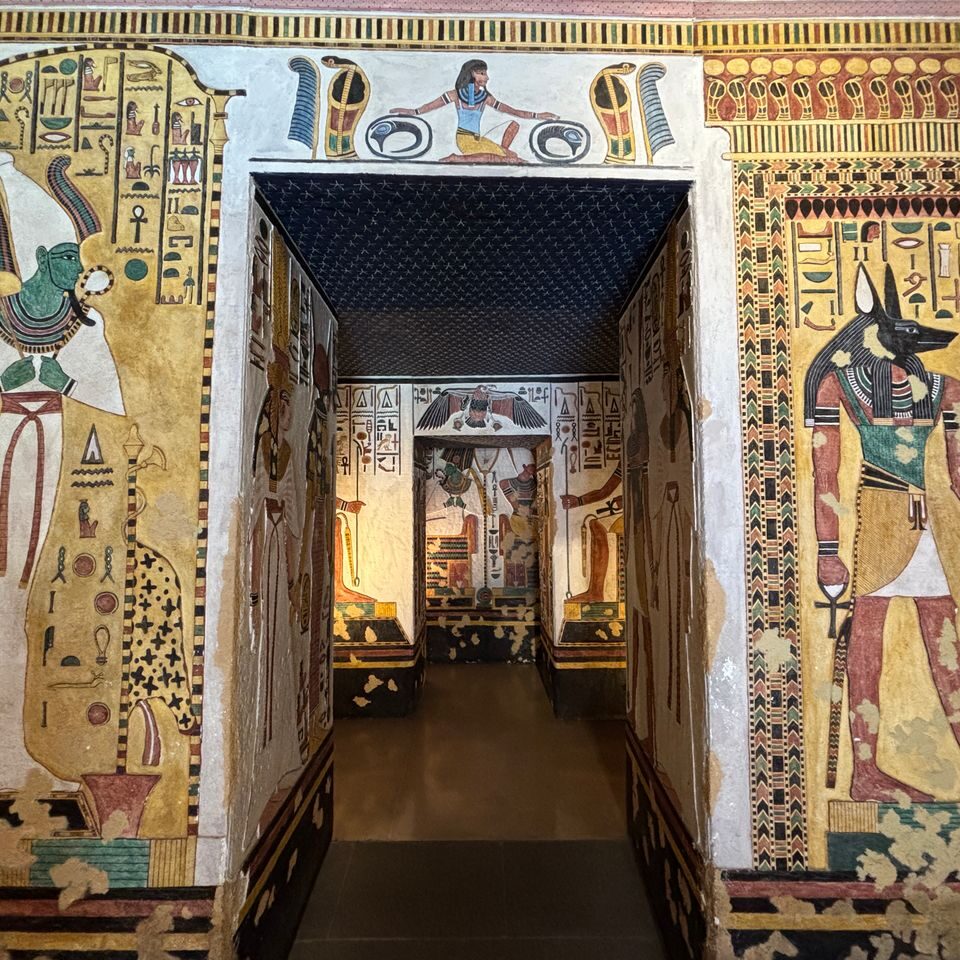
The image of Anubis is equally distinctive. He was commonly represented as a jackal or as a human figure with a jackal-like head. Animals of this kind were associated with desert areas and burial grounds, which helped connect the jackal with the protection of graves and the dead.
Over time, that watchful image became part of the visual language surrounding Anubis. In tombs, funerary objects, amulets, and papyri, his presence could signal care for the deceased and attention to the transition taking place.
These images can seem distant from modern life, especially when they are encountered behind museum glass or in books about ancient Egypt. Yet the underlying idea is recognizable. Societies develop symbols around death because death creates practical and cultural spaces that ordinary language does not always fill easily. A figure such as Anubis gave form to ideas of guardianship, dignity, and passage.
What the Name Carries
For Anubis, Inc., the name is connected less to the dramatic image of an ancient god and more to those quieter associations: protection, guidance, and respectful care for people who have died.
That meaning does not depend on a particular faith or spiritual belief. Families may understand death through religion, cultural tradition, personal philosophy, or no spiritual framework at all. The ancient story of Anubis belongs to its own time and culture. What remains relevant is the human attention given to the period between death, remembrance, and whatever a family understands to come next. Names carry histories, but they also gather new associations as they continue to be used. In this one, an ancient image of guardianship still leaves room for a simple idea: someone is being cared for as they make their final passage.
ABOUT ANUBIS
Anubis Cremations serves families throughout California with a calm, transparent approach to end-of-life care. We focus on clarity, environmental responsibility, and respectful handling at every step, helping families navigate the practical and emotional decisions that come with loss.
Our goal is simple: to make a difficult time clearer, gentler, and easier to move through.
Learn more at https://anubiscremations.com
Call us 24/7 at 323-644-3323
info@anubiscremations.com